The Modern Obsession With Being Thin
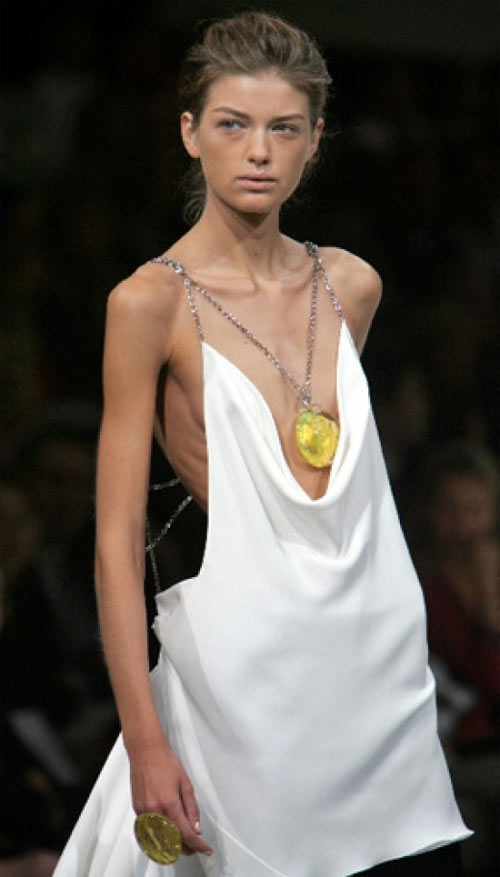
Let’s be honest—most of us have, at some point, wished for a slimmer body. It’s everywhere: social media, fashion trends, celebrity culture. The message feels constant and loud—thinner equals better. But what happens when that desire crosses a line?
For many people, the pursuit of a “perfect” figure turns into a dangerous game. It starts innocently—cutting calories, exercising more—but can spiral into extreme and unhealthy behaviors. I’ve seen it, you’ve probably seen it too. Bodies reduced to shadows of themselves, energy replaced with exhaustion.
And the truth? That version of thinness isn’t beauty—it’s a warning sign.
Extreme Dieting: A Slippery Slope
When Less Becomes Too Little
Healthy weight loss requires balance. But extreme dieting throws that balance out the window. Some individuals push their daily calorie intake below 300 calories—a shocking number when you consider that the average adult needs around 1,800 to 2,000 calories per day just to function properly.
To maintain such a low intake, people resort to drastic measures. Imagine surviving on hot water and a few leaves of salad. It’s like trying to run a car on fumes—it might move for a while, but eventually, it breaks down.
Dangerous Methods People Still Use
Even more alarming are the methods some people adopt in pursuit of thinness:
- Swallowing cotton balls to suppress hunger
- Eating tissues to create a false sense of fullness
- Inducing vomiting after meals
- Overusing laxatives
- Drinking extreme concoctions like lemon juice mixed with chili powder
These aren’t just unhealthy—they’re life-threatening. And yet, they persist.
The Body’s Breaking Point
From Slim to Skeletal
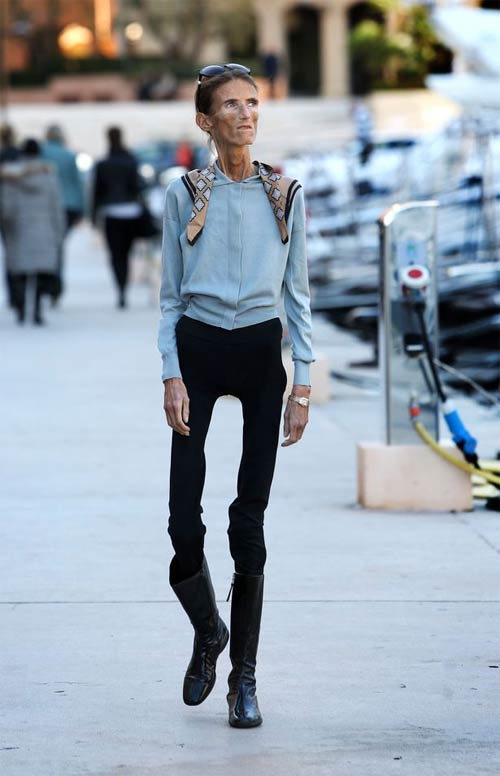
When the body is deprived of nutrients, it doesn’t just lose fat—it loses muscle, strength, and vitality. The result? A frail, exhausted frame that barely resembles a healthy human body.
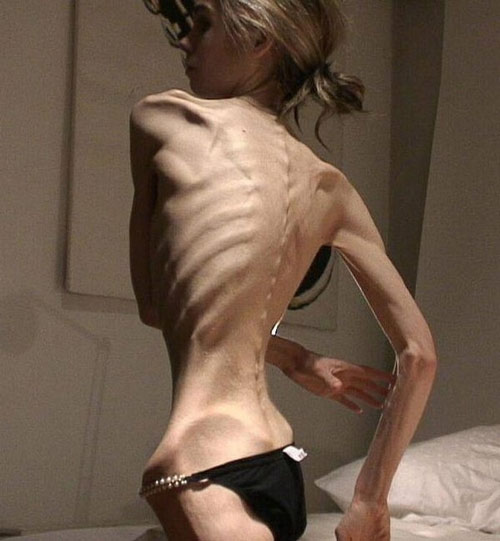
People in this state often appear as “walking skeletons.” Their skin clings to bones, their energy disappears, and even simple daily activities become overwhelming.
Long-Term Consequences
The longer extreme dieting continues, the more severe the damage:
- Organ failure
- Hormonal imbalances
- Weakened immune system
- Severe malnutrition
- Risk of death
It’s not just about appearance anymore—it’s about survival.
Real Stories Behind the Struggle
Jay Taylor: A Frightening Reality
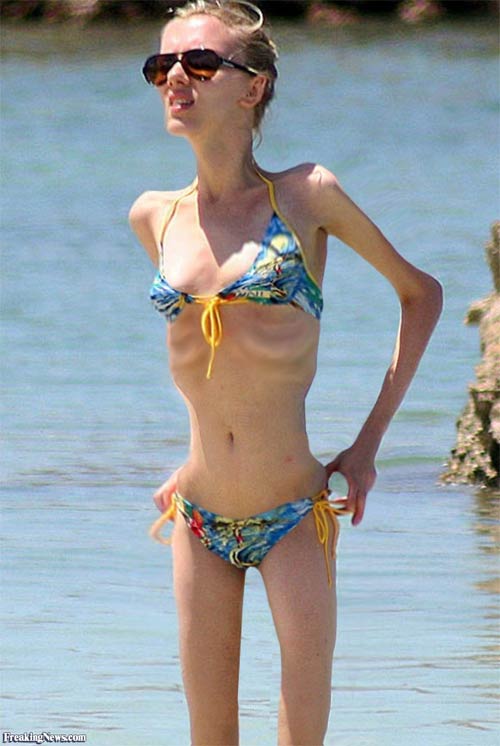
Jay Taylor once shared her deeply unsettling experience with anorexia. What started as simple dieting in her youth slowly evolved into a life-threatening condition.
Her story highlights something crucial: eating disorders don’t happen overnight. They build quietly, often disguised as discipline or determination—until they take control.
Valeria Levitin: A Regretful Journey
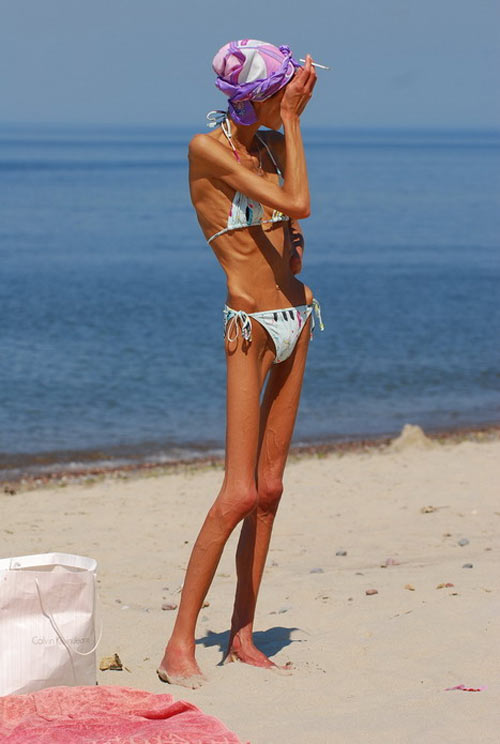
Valeria Levitin is often recognized as one of the thinnest women in the world. Standing at 1.72 meters tall and weighing just 25 kilograms, her appearance shocked many—but her story is even more powerful.
As a teenager, she was teased for being overweight. Those words stuck. They pushed her toward extreme dieting methods that eventually led to chronic anorexia.
Despite seeking medical help, her condition became irreversible.
Valeria later spoke openly about her experience, urging others not to follow the same path. She emphasized something we often forget: beauty isn’t about shrinking yourself—it’s about respecting your body.
Lizzie Velasquez: Not All Thinness Is a Choice
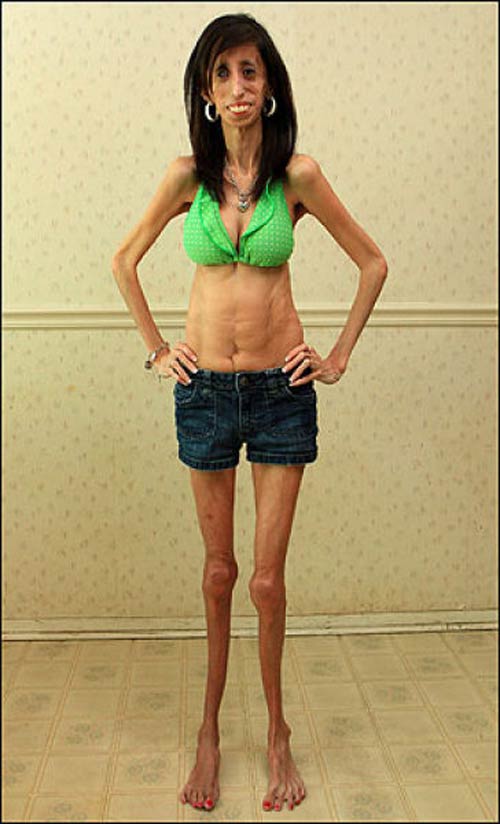
Not everyone who appears extremely thin has chosen that path. Lizzie Velasquez is a powerful example.
Due to a rare medical condition, her body cannot store fat. At 25 years old, she weighed only 26 kilograms and was blind in one eye. To stay alive, she had to eat up to 60 small meals a day.
Her story reminds us not to judge appearances too quickly. Sometimes, what we see is the result of circumstances far beyond control.
How the Mind Gets Trapped
When Dieting Turns Into Disorder
Here’s the scary part: the human body adapts. When you consistently restrict food, your body begins to accept that state as “normal.” Hunger signals weaken, appetite fades, and eating becomes difficult.
This is how anorexia develops—not just physically, but mentally. It becomes a cycle that’s incredibly hard to break.
The Role of Society and Family
Let’s not ignore the influence around us. Comments about weight, unrealistic beauty standards, and constant comparison all play a role.
Families also matter. Encouragement, education about nutrition, and emotional support can make a huge difference. A child who grows up hearing “you are enough” is far less likely to harm themselves chasing an impossible ideal.
Redefining Beauty: Health Over Appearance
What Does “Healthy” Actually Look Like?
A healthy body isn’t defined by a number on the scale. It’s defined by:
- Energy and vitality
- Balanced nutrition
- Physical strength
- Mental well-being
Think of your body like a house. Would you strip away its structure just to make it look smaller? Of course not. You’d want it strong, stable, and full of life.
Why Extreme Thinness Isn’t Attractive
Despite what trends suggest, an emaciated body doesn’t radiate beauty. It lacks the very things that make us human—energy, warmth, and presence.
Clothes might hang differently, but at what cost? True attractiveness comes from confidence, health, and the ability to fully engage with life.

The Hidden Victims: Models and Media Pressure
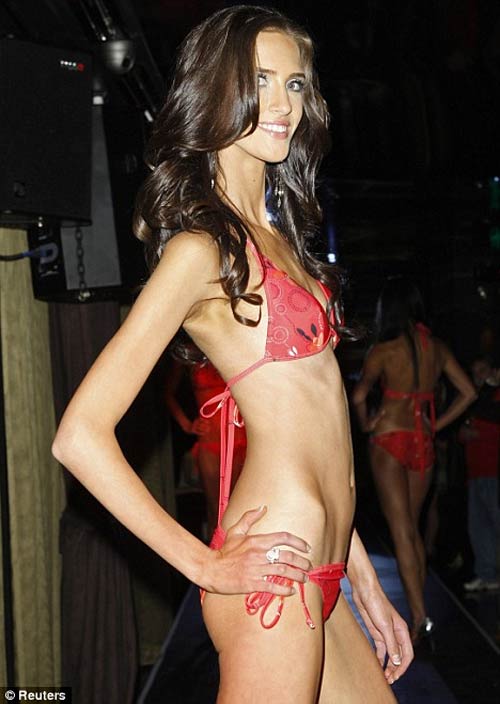
The fashion industry has long been associated with ultra-thin standards. Many models feel pressured to maintain extremely low body weights to stay competitive.
But behind the glamorous photos are often stories of struggle—restricted diets, exhaustion, and eating disorders. These individuals become silent victims of an industry that prioritizes image over well-being.
Thankfully, change is happening. More voices are speaking out, advocating for diversity and healthier standards. But there’s still a long way to go.
Conclusion: Choose Health, Choose Life
At the end of the day, the pursuit of beauty should never cost you your health. Extreme dieting may promise quick results, but it often leads to long-term damage—or worse.
The stories of people like Jay Taylor, Valeria Levitin, and Lizzie Velasquez remind us that every body has a story. Some are shaped by choice, others by circumstance—but all deserve respect and care.