Some old Hollywood photographs seem to carry their own soundtrack.
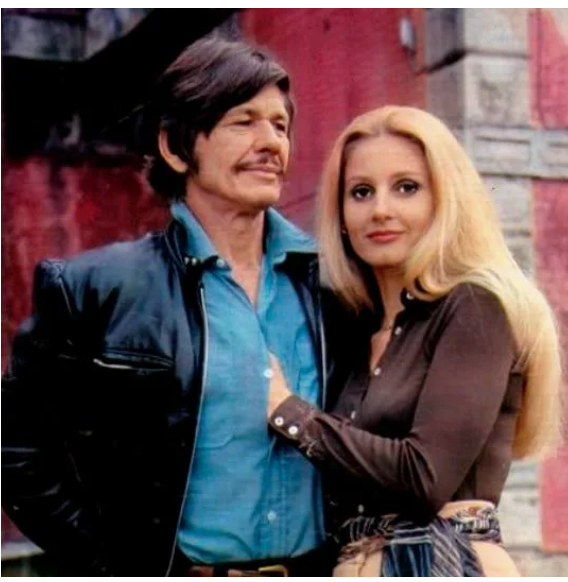
You can almost imagine the theater marquee glowing after sunset, the rustle of newspaper movie listings, and families deciding which picture they would see on Saturday night. One vintage photograph of Charles Bronson and Jill Ireland brings that era rushing back, capturing two stars whose lives became deeply connected both on and off the screen.
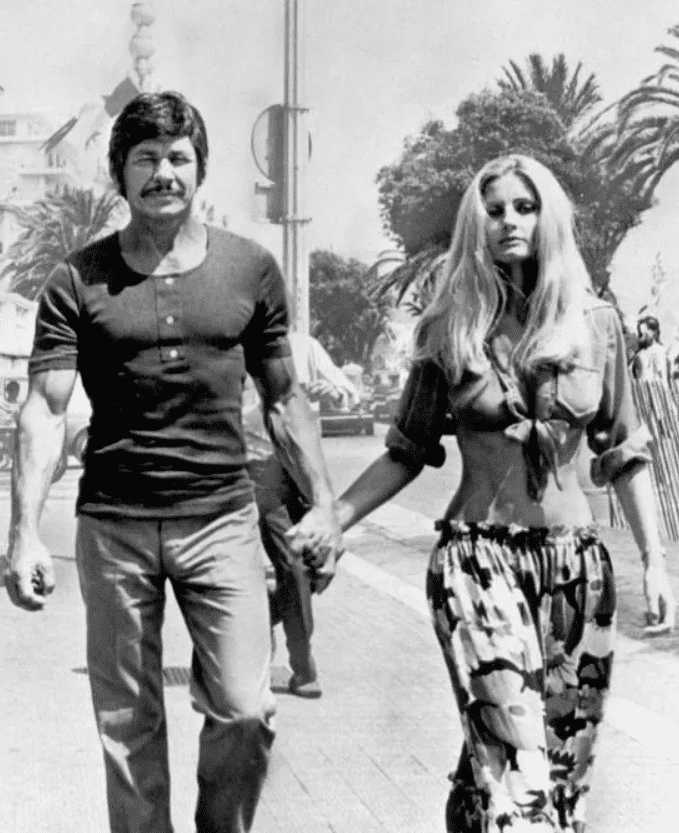
There is nothing particularly elaborate about the image. No red carpet. No formal studio portrait. Just two familiar faces together during a time when Hollywood fame still carried an air of mystery.
Hollywood Was Changing — And Bronson Fit the Moment
By the early 1970s, American movies were entering a different age.
The polished studio system that had shaped earlier decades was fading, and audiences were increasingly drawn to performers who felt less perfect and more authentic. Charles Bronson fit beautifully into that changing landscape.
He did not resemble the traditional matinee idols of Hollywood’s golden years. His appeal came from something tougher and more grounded. Bronson often played men who spoke little, watched carefully, and carried themselves as though life had already taught them difficult lessons.
That screen presence was rooted partly in a remarkable personal journey.
Born Charles Buchinsky in Pennsylvania coal country, Bronson grew up in a large working-class family. Before Hollywood entered the picture, he worked in coal mines and later served in the U.S. military during World War II. After the war, he studied acting and gradually found his way into films.
His rise was anything but instant.
He spent years playing soldiers, lawmen, outlaws, and other supporting characters before audiences began recognizing that his unconventional qualities were precisely what made him memorable.
Jill Ireland Brought a Different Energy
Jill Ireland’s path to the screen began an ocean away.
Born in England, she entered films during the 1950s before establishing herself in television as well. American audiences saw her in programs including The Man from U.N.C.L.E., where her graceful presence stood in interesting contrast to the rugged roles that later became associated with Bronson.
Where Bronson often seemed guarded and stoic, Ireland could appear warm and expressive.
Together, they created a balance audiences noticed.
Their paths crossed during the period surrounding The Great Escape. They married in 1968 and remained husband and wife until Ireland’s death in 1990.
For more than two decades, their personal and professional lives became unusually intertwined.
They Didn’t Just Live Together — They Made Movies Together
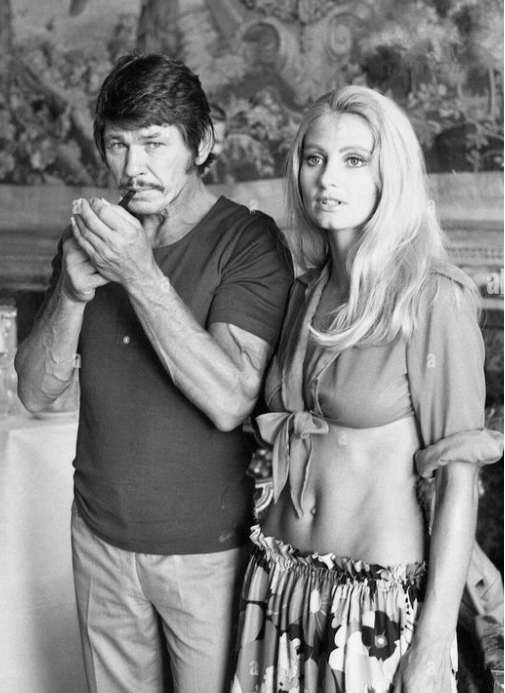
Hollywood couples have always attracted attention, but few have collaborated as extensively as Bronson and Ireland.
The two appeared together in roughly 15 films, including The Mechanic, The Valachi Papers, Breakout, Hard Times, Breakheart Pass, and From Noon Till Three.
Their chemistry often worked because it did not feel exaggerated.
Bronson rarely needed a long romantic speech. Ireland did not need dramatic gestures to establish emotional warmth. A look across a room or a quiet exchange could suggest the familiarity of two people who already knew each other exceptionally well.
That understated quality suited both performers.
For older moviegoers who remember seeing these films when they were new, their work also recalls an era when going to the movies felt like an event. There were newspaper advertisements, large theater posters, and sometimes a line stretching along the sidewalk before the evening show.
The Bronson Films People Still Talk About
By the 1960s and 1970s, Charles Bronson had developed one of cinema’s most recognizable screen personas.
Films such as The Magnificent Seven, The Great Escape, Once Upon a Time in the West, Hard Times, and later Death Wish helped establish his reputation as the strong, quiet figure audiences could believe in without needing endless dialogue.
His movies with Ireland sometimes offered another dimension.
The 1976 western comedy From Noon Till Three, for example, allowed the couple to explore romance and humor rather than relying entirely on Bronson’s familiar tough-guy image. Ireland also performed the movie’s theme song, “Hello and Goodbye,” which received a Golden Globe nomination.
It remains an intriguing film precisely because it gives audiences something different from two performers they thought they already understood.
Real Life Eventually Became More Difficult Than Any Screenplay
Away from movie sets, Bronson and Ireland built a blended family and shared the ordinary responsibilities that came with raising children while maintaining demanding careers.
Their later years together also brought serious challenges.
Ireland was diagnosed with breast cancer and chose to speak publicly about her experience during a period when many families were far less comfortable discussing the illness openly. She wrote about what she was going through and became an advocate for cancer research.
Ireland died in 1990 at just 54 years old.
She and Bronson had been married for more than 20 years.
Knowing how their story ended gives old photographs of the couple an additional emotional weight. What once looked like an ordinary candid moment can now seem almost precious.
Why Old Celebrity Photographs Feel Different Today
Modern celebrity images arrive by the hundreds.
A photograph can appear online in the morning and be forgotten before dinner. Another headline replaces it. Another video begins playing.
Older photographs were different.
A single picture might appear in a magazine, newspaper, or family scrapbook and remain there for decades.
Perhaps that is why this image of Bronson and Ireland feels so evocative.
The clothes belong to another era. The hairstyles do too. Yet the way they stand beside one another feels immediately recognizable.
They look less like two famous performers and more like a longtime couple simply moving through an ordinary day.
A Love Story Preserved Between Movie Frames
Charles Bronson died in 2003, more than a decade after Ireland.
Yet both remain part of the memory of classic film fans, especially those who remember a time when actors slowly earned recognition over years rather than becoming famous overnight.
Their story was never only about celebrity.
Bronson traveled from Pennsylvania coal country to international movie stardom. Ireland moved from British cinema and television into a long American career. Together they made films, raised a family, traveled, worked, and eventually faced difficulties that fame could not prevent.
That is what gives the old photograph its lasting power.
It cannot show an entire marriage or explain everything that happened before and afterward.
It simply freezes one moment.
For movie lovers who remember dimming theater lights, paper tickets, packed weekend screenings, and Charles Bronson’s unmistakable face filling a giant screen, that may be enough.
Sometimes one old photograph does not merely show us how Hollywood once looked.
It reminds us how it once felt.