Chapter 1: The Project No One Expected
Eleven-year-old Miles Carter spent four months building a portable solar-powered charging station for families affected by storms and power outages.
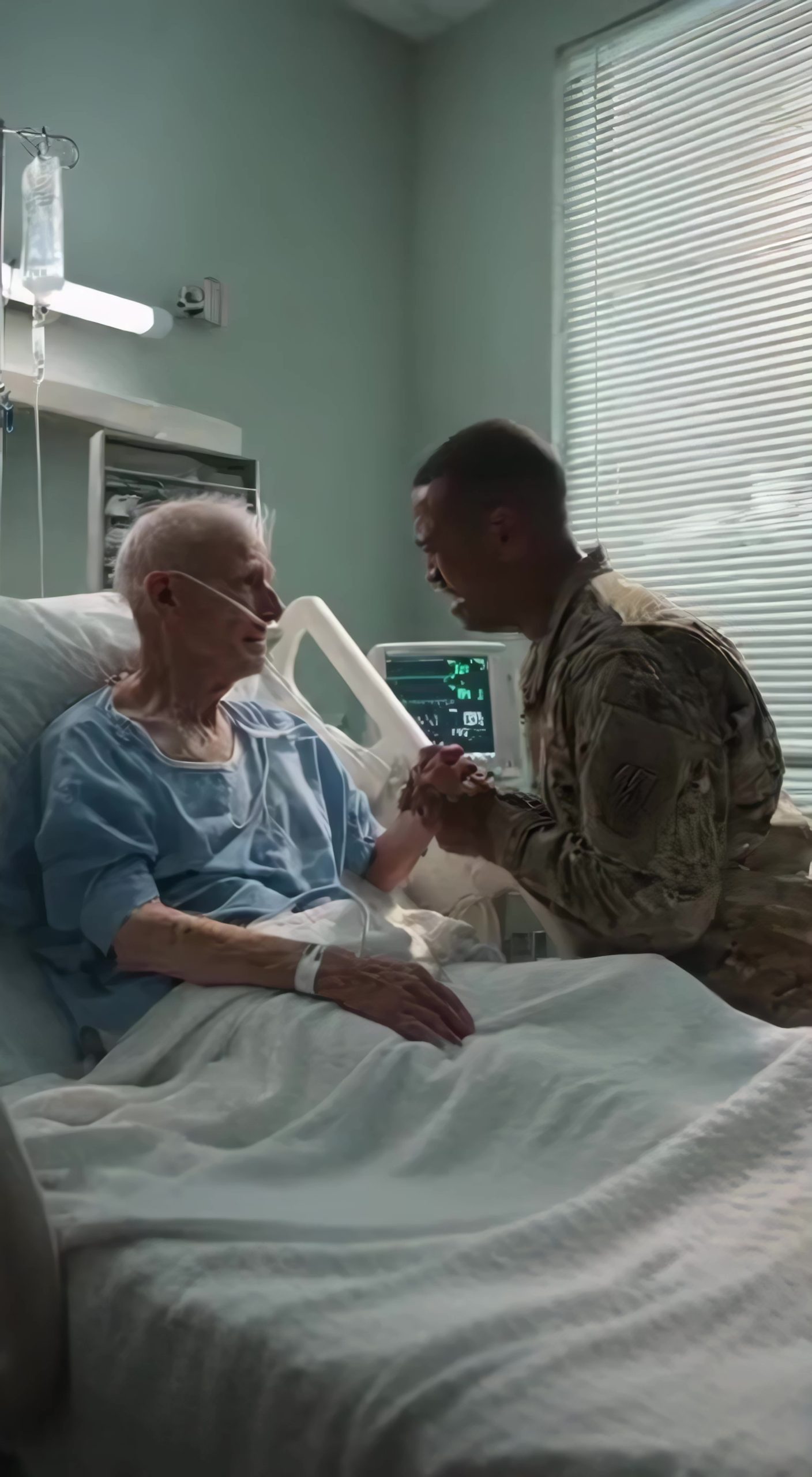
The idea came from his father, Staff Sergeant Darius Carter, who was serving overseas. During their weekly calls, Darius described how difficult it could be to keep essential devices working when electricity was unavailable.
He never designed the project for Miles.
“Your hands, your decisions,” Darius always said. “I’m only here to ask questions.”
Miles lived with his grandmother while his father was deployed. Money was tight, so he collected discarded electronics and purchased supplies with savings from mowing lawns.
His main competition at Hawthorne Academy was Mason Whitmore, whose mother funded the school’s annual science program. Mason arrived with professional equipment and a display that looked ready for a technology convention.
When Miles demonstrated that his inexpensive station could charge multiple devices, the judges were impressed.
For the first time in the competition’s history, Mrs. Whitmore’s son was not the favorite.
Two days before the awards ceremony, Miles was summoned to the principal’s office.
His project notebook was already on the desk.
Chapter 2: The Convenient Accusation
Principal Harlan sat beside Mrs. Whitmore, who placed several printed diagrams in front of Miles.
The drawings appeared almost identical to the early sketches in his notebook.
“These files were found on Mason’s tablet,” she said. “They were created before you registered your project.”
Miles stared at them.
“That’s impossible. Those are my drawings.”
Mrs. Whitmore folded her arms.
“Or perhaps someone helped you copy them.”
She casually mentioned Darius’s military engineering experience, even though Darius worked in logistics and had never claimed to be an engineer.
Principal Harlan offered Miles a deal.
If he withdrew from the competition, the school would avoid a formal cheating investigation. Nothing would appear in his academic record.
Miles understood what they were really asking: disappear quietly so Mason could win.
“I didn’t cheat,” he said.
“Think carefully,” the principal warned. “A scholarship could be at risk.”
The competition’s winner would receive a $10,000 education award. For Miles, that money represented opportunities his grandmother could never afford.
For the Whitmores, it appeared to represent something else—the expectation that their family name should always come first.
Miles refused to withdraw.
Chapter 3: The Detail They Overlooked
Science teacher Elena Ramirez had supervised Miles’s work from the beginning. She remembered watching him draw the original diagrams during lunch.
She also remembered Mason borrowing Miles’s notebook for what he called “research.”
Ms. Ramirez requested the digital files Mrs. Whitmore had submitted. Their visible creation dates supported her accusation, but the metadata told a different story.
The diagrams had first appeared on Mason’s tablet after Miles drew them—not before.
Someone had manually changed the dates.
The school’s hallway cameras provided another clue. Footage showed Mason photographing pages from Miles’s notebook while the classroom was empty.
When questioned privately, Mason began to cry.
He admitted that his mother had told him to copy the drawings after realizing Miles’s project was better. She later altered the files and instructed him to say the ideas were his.
“She said the school owes us,” Mason whispered. “She said we pay for everything.”
Principal Harlan wanted the matter handled quietly. Mrs. Whitmore had already threatened to withdraw her donation if Miles remained in the competition.
Ms. Ramirez refused.
She sent the evidence to the independent judging panel and the district’s academic integrity officer.
By the morning of the ceremony, the truth had reached people Mrs. Whitmore could not pressure.
Chapter 4: The Doors Opened
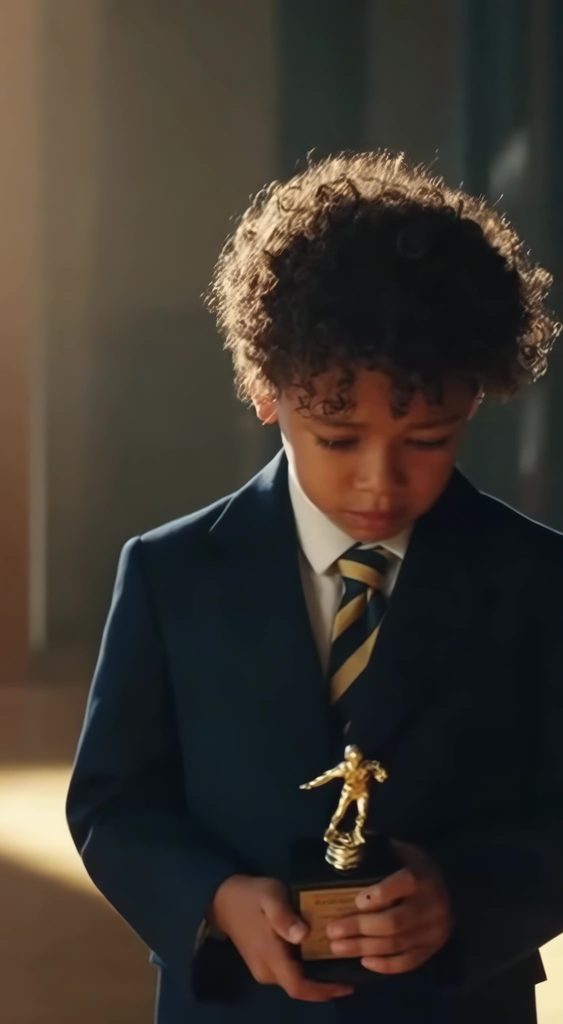
Miles stood alone beside the stage, holding the trophy but still unsure whether he would be allowed to keep it.
The head judge approached the microphone.
“After reviewing the development records and original documentation, the panel has unanimously confirmed Miles Carter as this year’s winner.”
Applause filled the auditorium.
Mrs. Whitmore remained seated, her expression frozen.
The judge continued.
“The evidence also revealed an attempt by an adult to interfere with the competition. Hawthorne Academy will introduce anonymous project numbers and independent digital reviews for all future awards.”
Mrs. Whitmore was immediately removed from the science committee. Her donation would no longer give her any role in judging, scholarship decisions, or student selection.
Money could support a school.
It could not purchase ownership of its students’ achievements.
Miles looked down at the trophy. The person he wanted to share the moment with was thousands of miles away—or so he believed.
Then the auditorium doors opened.
A soldier stepped into the room carrying a travel bag.
Miles stopped breathing.
“Dad?”
Darius smiled.
“Hey, buddy.”
The trophy slipped from Miles’s hands and landed safely on the carpet. He ran across the auditorium as Darius dropped to one knee and opened his arms.
“Dad!” Miles cried. “I missed you so much!”
“I missed you too,” Darius whispered, holding him tightly.
Even the judges turned away to hide their tears.
Chapter 5: The Victory Money Couldn’t Buy
Darius had received unexpected leave and traveled directly from the airport. Ms. Ramirez had helped him keep the return a secret.
When Darius learned what Mrs. Whitmore had done, he did not confront her publicly.
Instead, he thanked Mason for eventually telling the truth.
“Doing the right thing after making a mistake still takes courage,” he told the boy.
Mrs. Whitmore later issued a formal apology and stepped down from the school’s parent board. The district returned the portion of her donation that had been tied to personal influence.
Mason was disqualified, but Miles asked the school not to isolate him. The two boys eventually rebuilt their friendship while working on separate projects under teacher supervision.
Miles used part of his scholarship to attend a summer engineering program. With Darius’s encouragement, he improved the charging station and donated several units to a regional emergency-preparedness organization.
The photograph from the ceremony showed Miles holding his trophy beside his uniformed father.
People assumed the award was the most important part of that day.
It wasn’t.
Miles had already learned something no scholarship could teach: integrity may appear powerless when wealth controls the room, but truth only needs one honest person to protect it long enough to be heard.
Mrs. Whitmore had tried to purchase a victory for her son.
Instead, she lost her influence, damaged his confidence, and watched the child she underestimated earn something money could never manufacture—a victory that truly belonged to him.