Some reunions begin with a quiet glance.
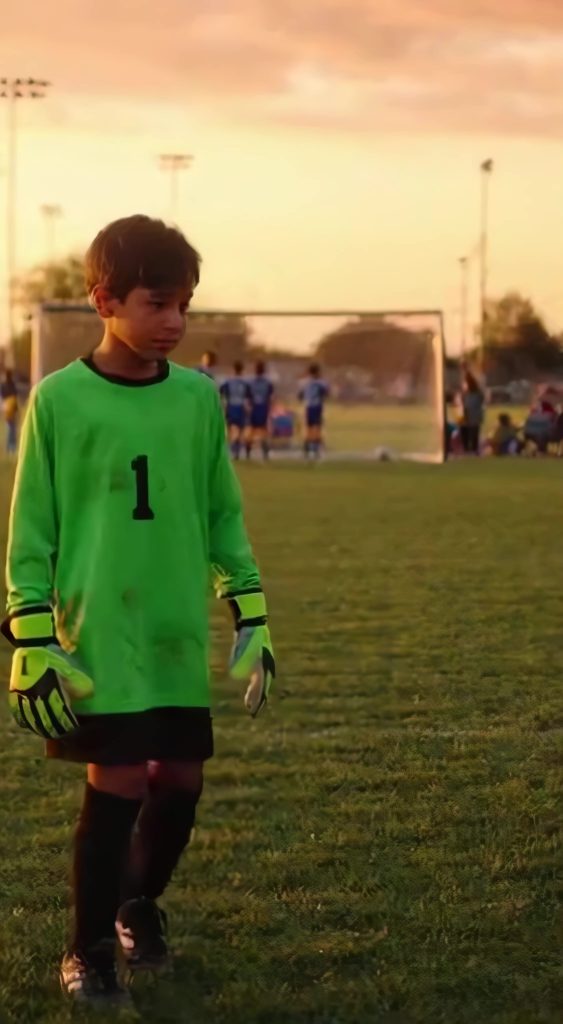
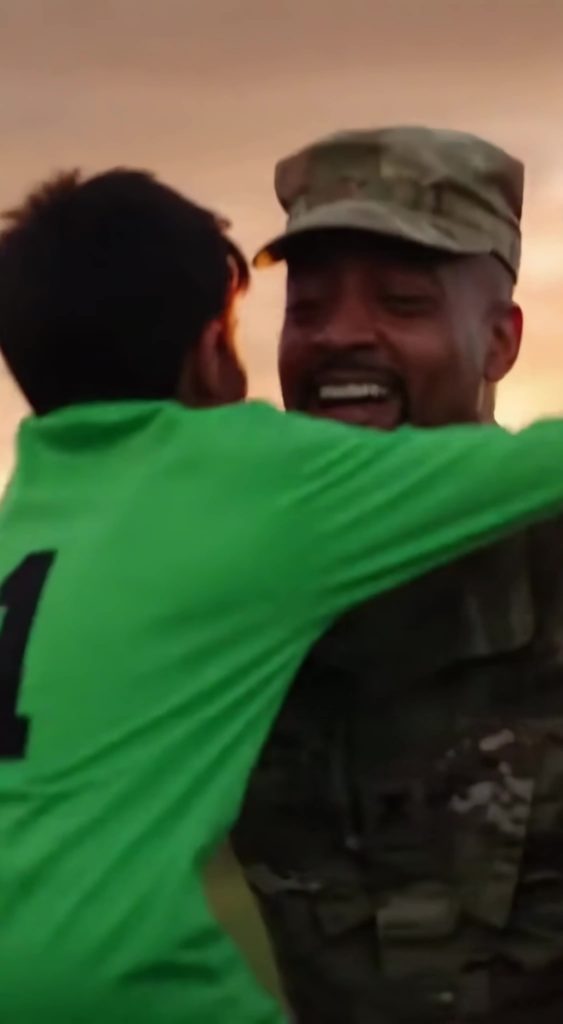
On a soccer field glowing under the warm light of late afternoon, a young goalkeeper stands near the action in a bright green jersey and gloves. Around him, the familiar rhythm of youth sports continues—players on the field, families along the sidelines, and the easy noise of an ordinary game.
At first, nothing seems unusual.
The boy looks down and walks slowly across the grass, focused on the moment in front of him. To anyone watching from a distance, it could have been just another evening at the field.
Then he notices someone waiting nearby.
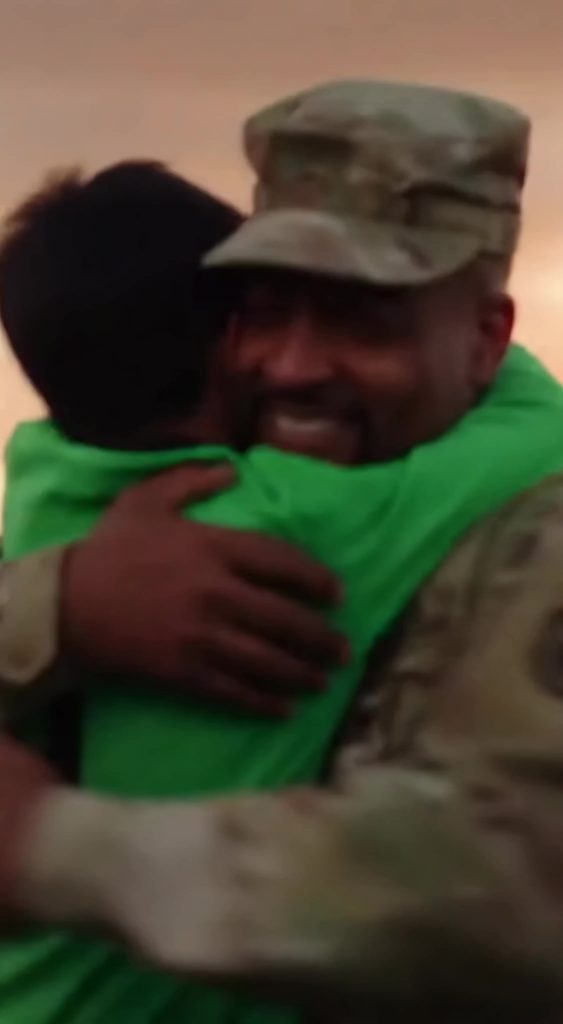
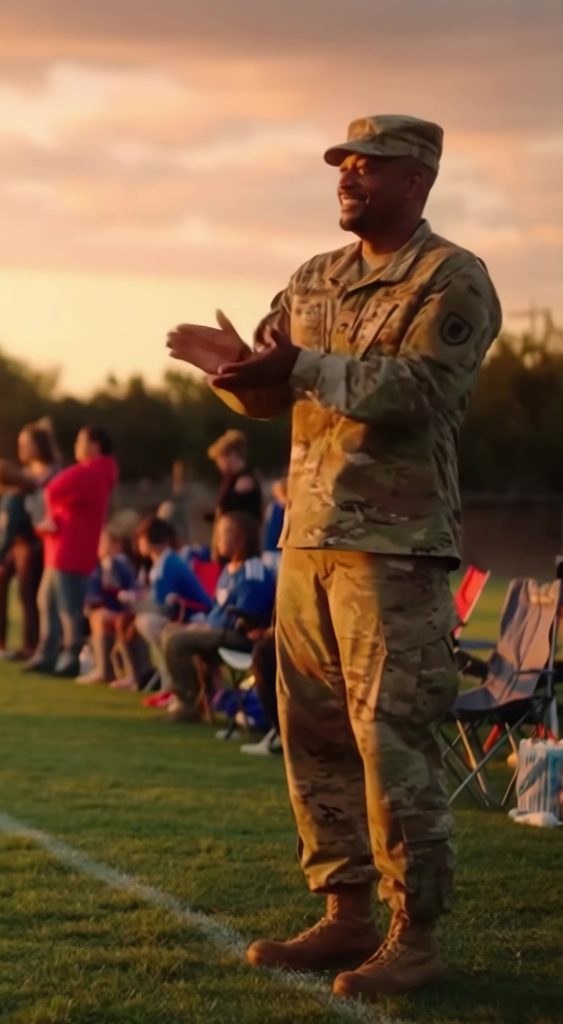
A man in uniform stands along the sideline, smiling and watching him.
For a second, the boy seems to process what he is seeing.
Then everything changes.
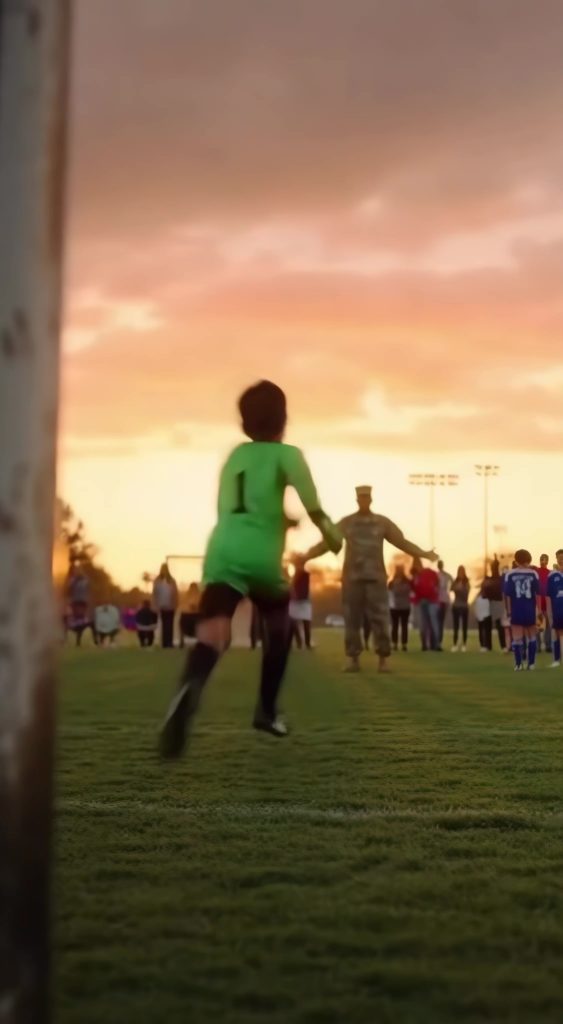
He turns toward the man and moves quickly across the field. The careful pace disappears. Within moments, he is running.
The soccer game no longer matters.
The sidelines no longer matter.
There is only the person standing there.
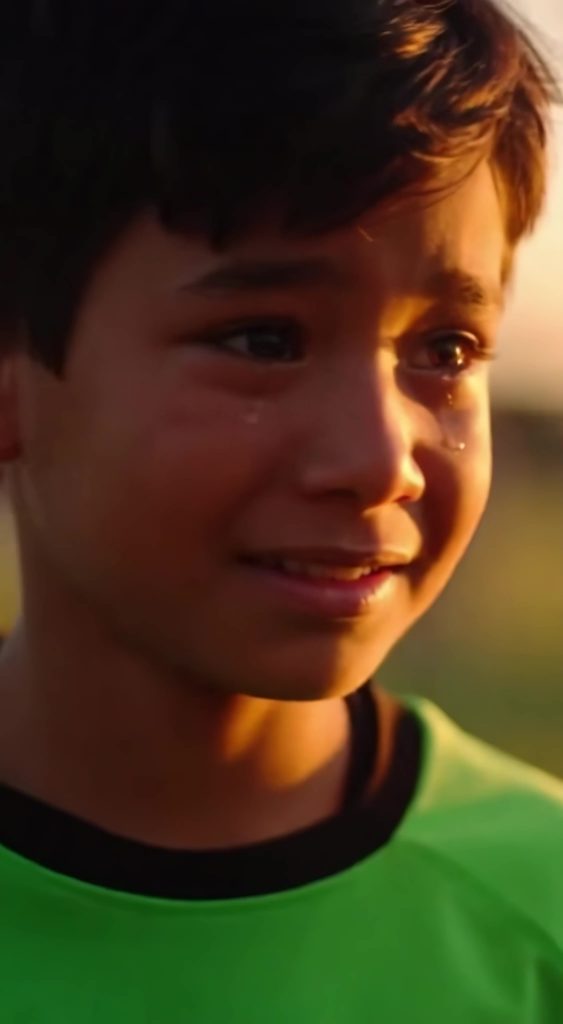
When they finally reach each other, the boy wraps his arms around him, and the man holds him tightly. It is a simple embrace, but it carries the kind of emotion that needs no explanation.
Scenes like this often remind older Americans of a time when waiting felt slower.
Before smartphones, instant messages, and video calls, families often depended on letters, photographs, and occasional telephone calls to stay connected across distance.
A letter could become something treasured.
It might be opened carefully, read more than once, and then folded back along the same creases before being placed in a drawer for safekeeping.
Photographs were carried in wallets.
Calendars held important dates.
And families learned how to wait for someone to come back.
Children experienced that waiting in their own way.
They might not understand schedules or responsibilities. They might not know exactly how far away someone was. But they understood absence.
They knew when a familiar voice was missing from the house.
They knew when a chair at the table was empty.
And they knew how different everything felt when that person finally returned.
That may be why the boy’s run across the field feels so familiar.
It is not simply about a soccer game.
It is about recognition.
It is about the moment an ordinary place suddenly becomes unforgettable because someone important has appeared there.
For many adults, memories like these remain surprisingly vivid.
Maybe it was a parent waiting at the school gate.
A family member returning from a long trip.
A loved one appearing unexpectedly at a birthday party.
Or someone standing at the edge of a field when no one expected them to be there.
Years later, people often forget the details around those moments.
The final score may disappear from memory.
The names of the opposing team may be forgotten.
Even the weather may become difficult to recall.
But the feeling remains.
The surprise.
The run.
The embrace.
That is how family memories often work.
They preserve emotion long after the smaller details begin to fade.
One day, the young goalkeeper may look back on this afternoon and remember little about the match itself. He may not remember every save or every play.
But he may remember looking toward the sideline.
He may remember recognizing that familiar face.
And he may remember running without hesitation.
Because sometimes the best moment at a soccer field has nothing to do with the game.
Sometimes, the greatest victory is simply finding someone you missed waiting for you at the edge of the field.