Some of the most meaningful moments in life arrive without warning.
There is no stage, no announcement, and no carefully planned celebration. Sometimes, there is only a quiet afternoon, a familiar place, and one person suddenly appearing where they were deeply missed.
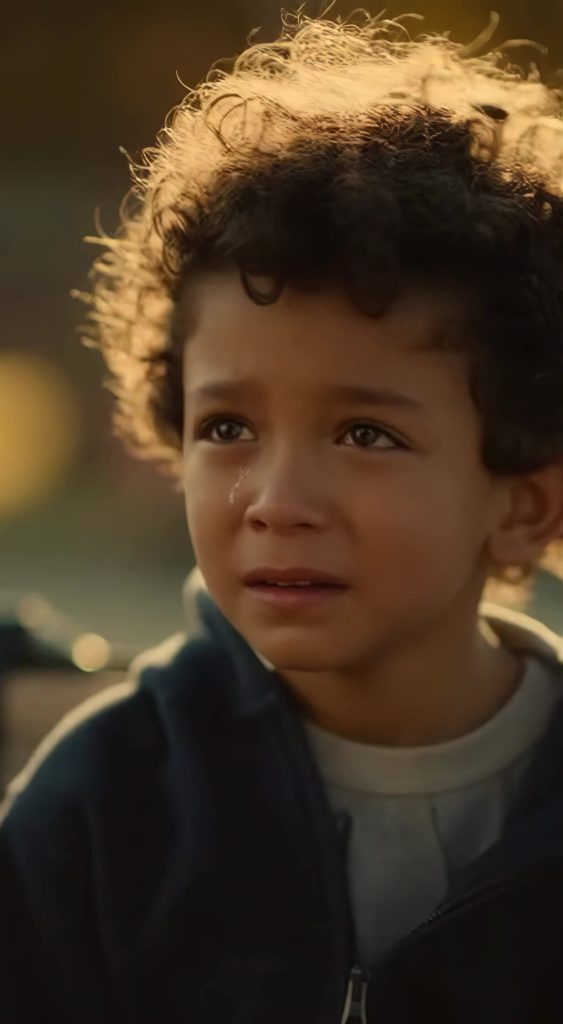
In this touching scene, a young boy sits alone on a bench outside. He seems small against the open space around him, his attention turned inward as the afternoon light stretches across the ground.
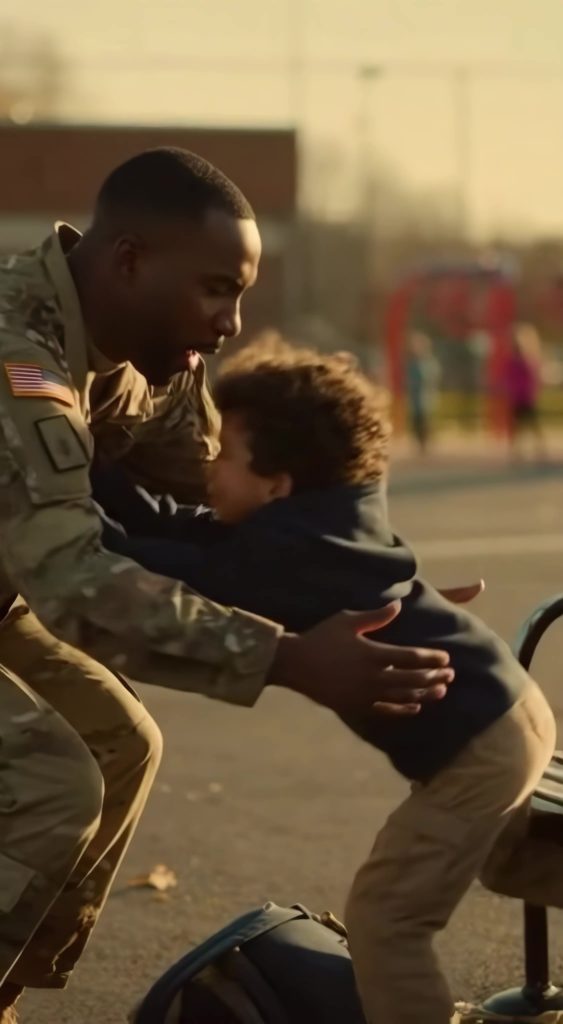
Then someone approaches.
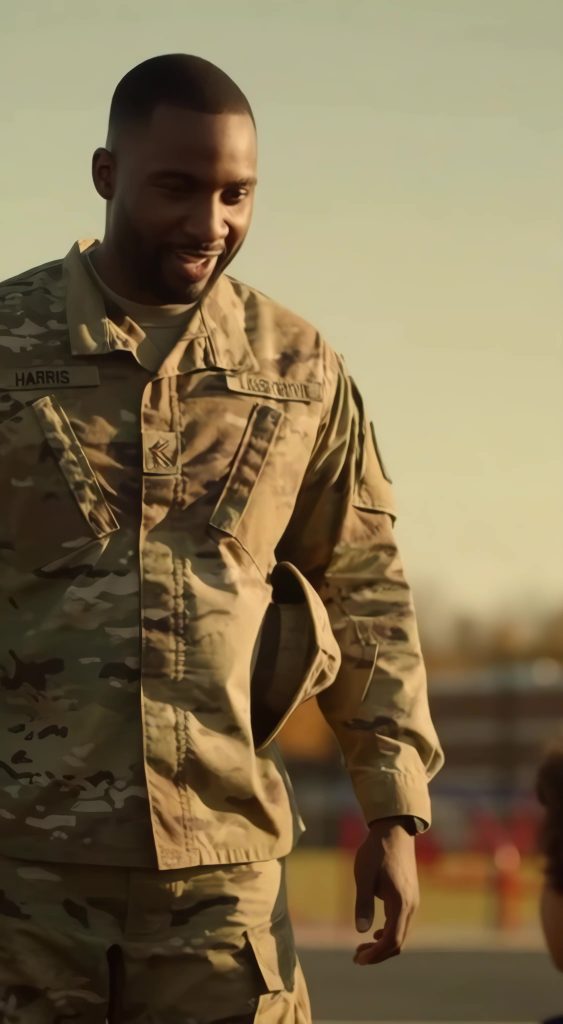
A man in uniform walks toward him.
At first, the boy seems unaware of what is happening. But within moments, he notices the familiar figure nearby.
Everything changes.
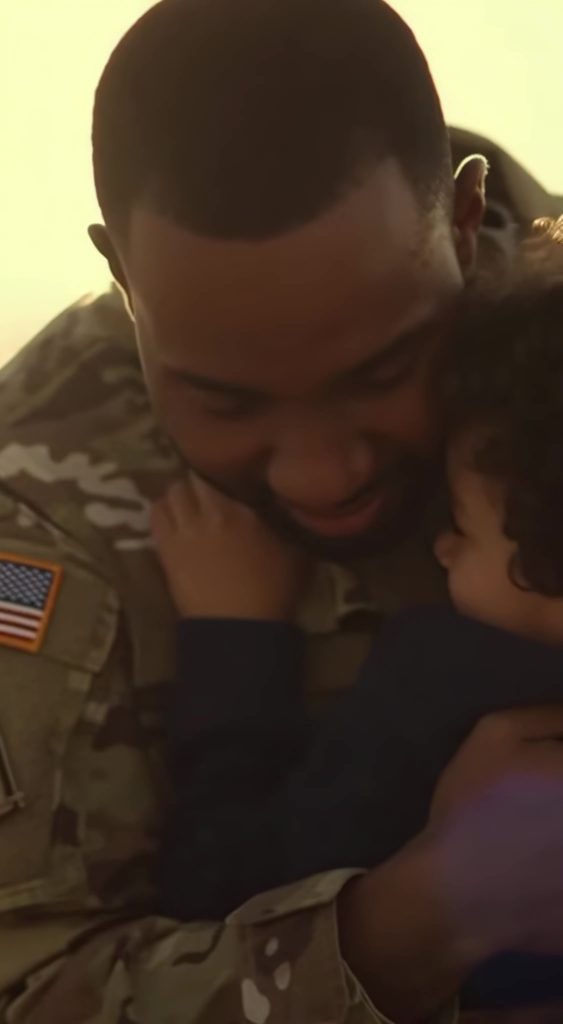
The boy quickly gets to his feet and moves toward him. The distance between them disappears almost instantly. He runs into the man’s arms, and they hold each other tightly.
There is no need for a long explanation.
The embrace says enough.
For many American families, a moment like this may bring back memories of waiting for someone important to return. Older generations especially may remember a time when staying connected across distance required patience.
There were handwritten letters.
Phone calls made from kitchen walls or hallway tables.
Photographs kept in wallets.
Dates circled on calendars.
Families learned how to wait.
Children often experienced that waiting in the simplest way. They might ask when someone was coming home, keep a favorite photograph nearby, or watch the driveway a little more closely than usual.
Adults understood schedules, responsibilities, and distance.
Children understood something even simpler.
Someone they loved was not there.
That is what makes a reunion like this so powerful.
The boy does not need a speech explaining what the moment means. He simply reaches for the person standing in front of him.
And in that embrace, the waiting seems to disappear.
For people who grew up before smartphones and video calls, scenes like this may feel especially familiar. A letter once carried more than words. A photograph could be handled so often that its edges softened. A phone call from far away could bring the whole family into the same room just to hear a familiar voice.
Today, communication has changed.
Messages arrive instantly. Faces can appear on a screen from thousands of miles away. Families can share photographs, birthdays, school events, and ordinary evenings almost as they happen.
But some things have not changed at all.
Seeing someone in person is different.
Hearing their footsteps nearby is different.
And no screen can quite replace the feeling of being held by someone you have missed.
Years from now, the boy in this scene may not remember every detail of that afternoon.
He may forget what the weather was like.
He may forget the bench.
He may forget what he was wearing.
But he may remember the moment he looked up.
He may remember running forward.
He may remember how safe and familiar that embrace felt.
That is how family memories often survive.
Not as perfect records of dates and places, but as feelings.
The sound of a voice.
The warmth of an embrace.
The relief of realizing that someone is finally standing close enough to touch again.
Life moves quickly.
Children grow taller.
Homes change.
Photographs fade.
But certain reunions remain bright in the mind because they remind us of something simple and lasting:
Home is not always a place.
Sometimes, home is the person you run toward when they finally come back.