For anyone who watched American television in the late 1990s and early 2000s, Amanda Bynes may instantly bring back memories of after-school television, Nickelodeon comedy, and an era when young stars became familiar faces in millions of family living rooms.

Bynes rose to fame as a teenager and eventually made the transition from children’s television to mainstream Hollywood. During those years, audiences knew her for an expressive comedic style, a bright smile, and the polished red-carpet appearance that became associated with young celebrities of the early 2000s.
When Television Had a Very Different Rhythm
The entertainment landscape Bynes entered feels remarkably distant today.
Young viewers once waited for favorite shows to air at a specific hour. There were no endless social-media feeds offering constant updates about performers, and celebrity photographs usually arrived through entertainment magazines, television interviews, or movie-premiere coverage.
For many Americans who watched Bynes during those years, seeing photographs from that period can immediately bring back memories of video stores, mall theaters, family television sets, and a much less connected entertainment culture.
By the mid-2000s, she had successfully moved beyond children’s programming and become a recognizable Hollywood performer.
Years Away From the Familiar Hollywood Image
As time passed, Bynes increasingly stepped away from the public image audiences remembered from her early career.

Her personal life also became the subject of considerable public attention. One major milestone came when the conservatorship that had governed important aspects of her life for nearly a decade was formally terminated following a successful legal petition.
That chapter made her story very different from the traditional Hollywood narrative of premieres, new movies, and carefully managed publicity.
Instead, many of the updates surrounding Bynes concerned her life away from acting.
For longtime fans, that distance from entertainment created an unusual contrast. A performer who had once seemed almost constantly visible suddenly belonged more to memory than to current television.
She Has Spoken Openly About Cosmetic Choices
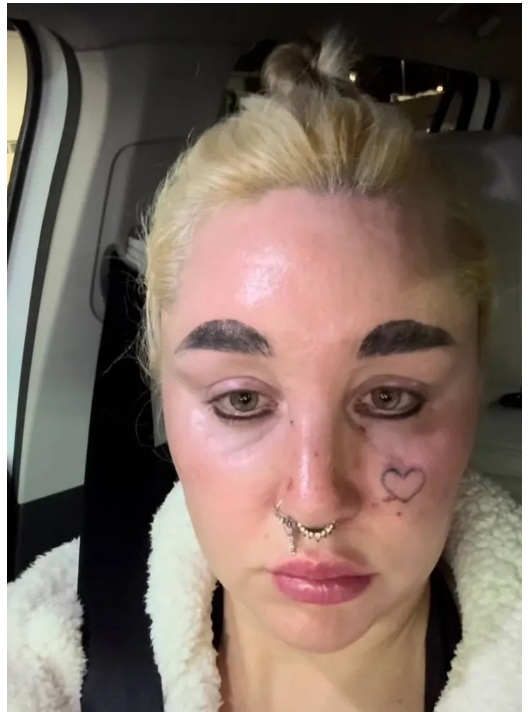
More recent images naturally generated discussion because Bynes no longer looks exactly as she did when audiences first encountered her as a teenager.
But comparing photographs taken decades apart requires some perspective. Everyone changes with time, and celebrity photographs often encourage unrealistic comparisons between adulthood and images captured during someone’s youth.

Importantly, Bynes herself has publicly discussed some cosmetic decisions rather than leaving every change to speculation. She acknowledged undergoing blepharoplasty, an eyelid procedure, and said the result improved her confidence. The original report also notes that she later discussed receiving lip filler.
Those are personal choices, and they are best understood through what Bynes herself has chosen to disclose rather than through assumptions based solely on photographs.
One Small Tattoo Became Part of Her New Look
Another immediately recognizable feature in newer photographs is the heart-shaped tattoo on her cheek.
Combined with different hairstyles, stronger brows, facial piercings, and other styling choices, it creates an appearance noticeably different from the young performer remembered from earlier television and movie roles.
That difference is precisely what has attracted attention whenever new candid photographs appear.
But perhaps the most interesting part of seeing these images is not deciding whether someone looks “better” or “worse.”
It is realizing how much time has passed.
The teenage star people remember exists in photographs from another era. The woman in current images has lived through decades of experiences that audiences did not share with her.
Why “What If” Images Should Be Viewed Carefully
The original feature also included AI-generated interpretations imagining how Bynes might appear today without certain cosmetic changes or facial tattoos.
Such images can be visually interesting, but they are not photographs of an alternate reality.
There is no scientifically reliable way to know exactly how someone would have aged under a different set of personal choices. Genetics, lifestyle, hairstyles, makeup, lighting, photography, and ordinary aging all influence appearance.
An AI rendering is therefore better understood as an artistic interpretation than as evidence of what a person “should” look like.
That distinction is especially important when discussing real people.
The Real Story May Be the Passage of Time
For longtime viewers, Amanda Bynes represents something larger than a collection of before-and-after photographs.
She belongs to a particular chapter of American pop culture.
Her early television years arrived during an era of cable channels, scheduled programming, movie posters, teen magazines, and Hollywood comedies that many viewers now remember with considerable affection.
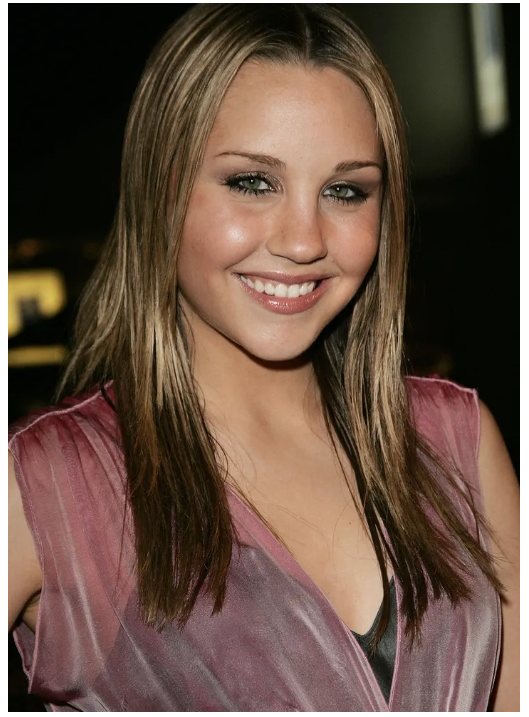
Seeing her today can therefore produce the same feeling that comes from rediscovering an old yearbook photograph or hearing a song that has not played on the radio in years.
You remember the person — but you also remember yourself.
The fashions have changed. Television has changed. Hollywood has changed. And, naturally, the people audiences once watched as teenagers have changed too.
Perhaps that is the most respectful way to look at these photographs.
Not as an invitation to judge how Amanda Bynes appears today, but as a reminder of how dramatically life can evolve between one photograph and the next.
For viewers who remember her earliest days on television, the real surprise may not be how different she looks.
It may simply be realizing how many years have passed since America first watched her grow up on screen.