Chapter 1: The Petition
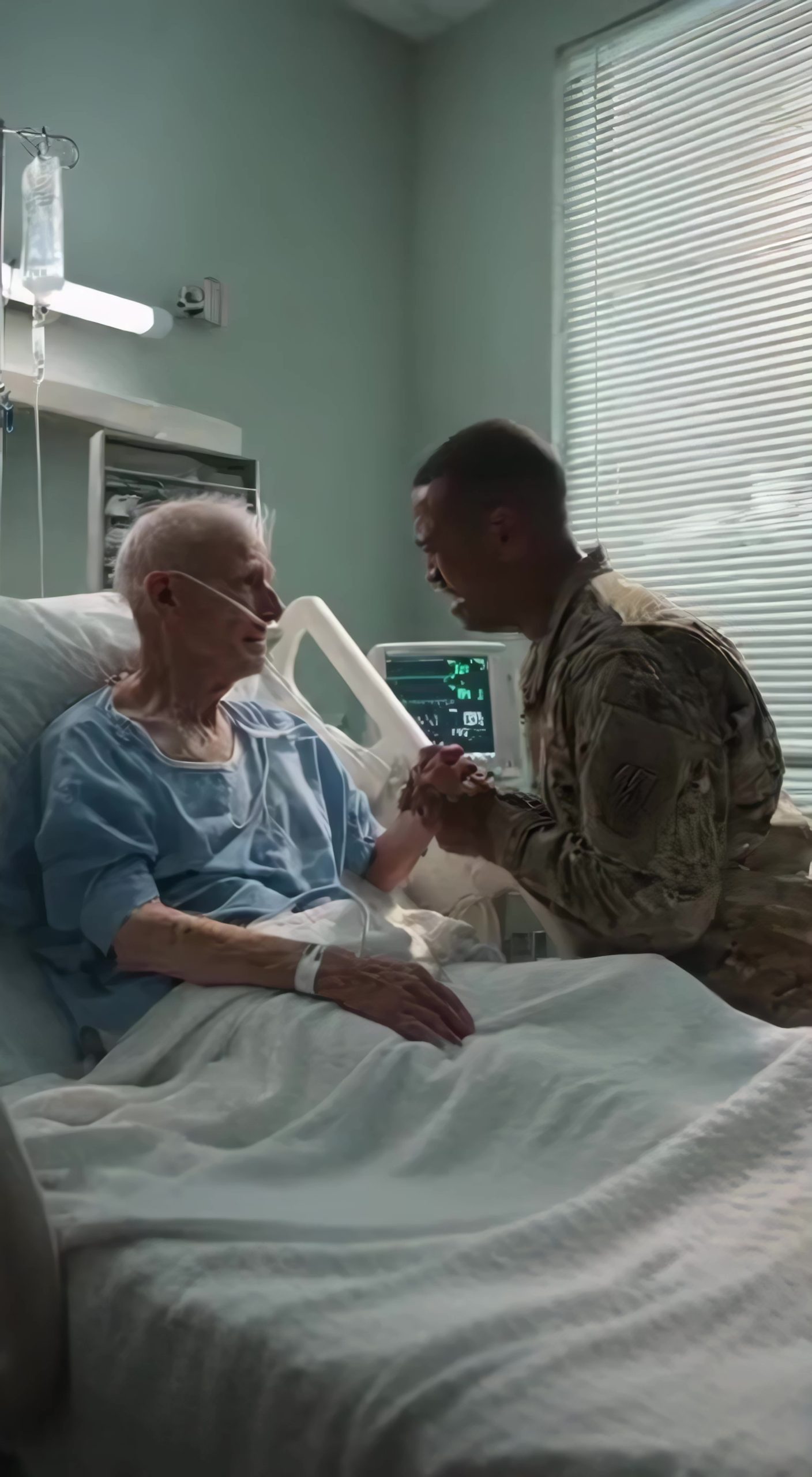
Three weeks before Sergeant Adrian Walker was scheduled to return home, his ex-wife filed for primary custody of their children.
For nearly two years, Rochelle had visited thirteen-year-old Nia and nine-year-old Caleb only when it fit her schedule. Adrian arranged their medical appointments, attended school conferences, and coached Caleb’s basketball team.
Before deploying overseas, he completed a formal family-care plan. His younger brother, Marcus, moved into Adrian’s house so the children could remain in their school and follow their normal routines.
Rochelle had agreed to everything.
Then she changed her story.
She claimed Adrian had “abandoned” the children by leaving them with a relative. Her attorney argued that she could offer a more stable home than a father whose career might take him away again.
“They’re treating his service like a parenting failure,” Marcus said after reading the petition.
Adrian remained calm during their video call.
“Don’t say anything negative about their mother in front of them,” he replied. “Just save every message.”
That advice soon became more important than either brother expected.
Chapter 2: A Family Made for the Camera
Rochelle had recently started presenting herself online as a family lifestyle expert.
Her carefully edited videos showed healthy meals, organized homes, and emotional speeches about second chances. She rarely mentioned that her children lived with Adrian.
That changed during his deployment.
Without permission, Rochelle began posting old photographs of Nia and Caleb. In one video, she claimed she was fighting to “reunite a family separated by an absent parent.”
The post attracted thousands of views.
A parenting brand soon offered her a lucrative promotional contract—but only if her children appeared regularly in her content.
Suddenly, Rochelle wanted additional weekends. She arrived with expensive gifts, recorded every outing, and left as soon as she had enough footage.
Nia noticed.
“She asks me to smile before she asks how school is going,” she told Marcus.
Then Rochelle made a mistake.
While speaking to someone on the phone, she forgot Nia was in the next room.
“My manager says the custody story has to be resolved before the campaign launches,” Rochelle said. “Once they live with me, the brand deal is guaranteed.”
Nia quietly recorded the conversation on her tablet.
She didn’t tell anyone immediately. Part of her still hoped her mother wanted her for reasons that had nothing to do with money or an online image.
Chapter 3: The Message From Home
Adrian’s return date was unexpectedly moved forward, but he told only Marcus.
He wanted to surprise the children—and he also wanted to learn what had been happening without giving Rochelle time to change her story again.
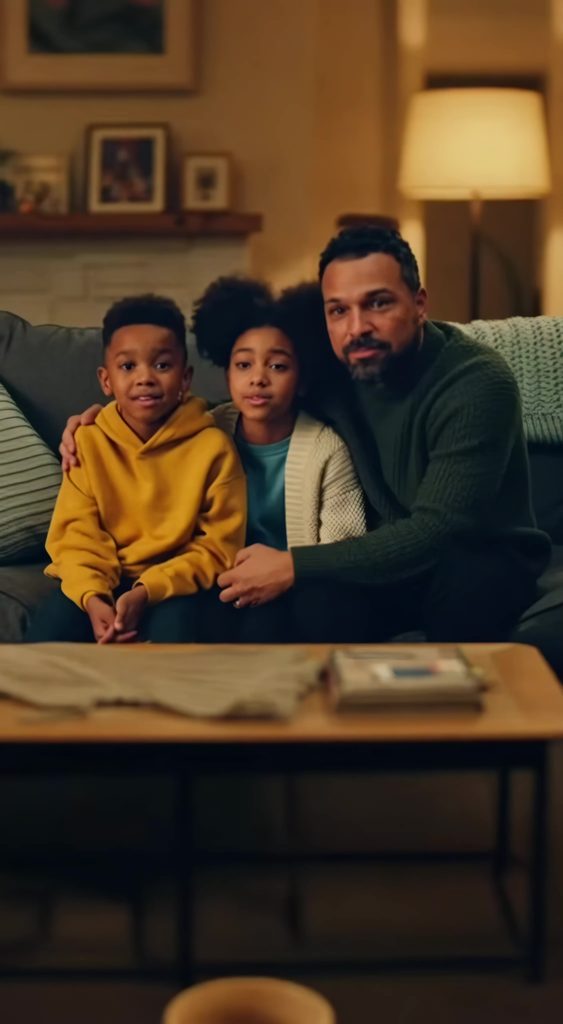
On the evening he arrived, Marcus gathered Nia and Caleb on the couch.
“Let’s send your dad a message,” he suggested.
Caleb leaned toward the camera.
“Hey, Dad. We just wanted to send you something.”
“We miss you tons,” Nia continued. “The house isn’t the same without you.”
“We love you,” Caleb said. “Come home soon, okay?”
Marcus placed an arm around them.
“Please stay safe. We’re proud of you. Always.”
Nia suddenly looked beyond the phone.
A uniformed figure was standing in the doorway.
“Wait—Dad?”
Adrian smiled.
Caleb shouted, and both children launched themselves from the couch. Adrian dropped his bag just before they crashed into his arms.
Marcus joined the embrace, laughing as Nia began to cry.
“I can’t believe you’re here,” she whispered.
“I told you I would come home,” Adrian replied.
Later that night, Nia finally showed him the recording from Rochelle’s phone call.
Adrian listened without interrupting.
When it ended, he didn’t look angry.
He looked disappointed.
“So that’s what this was about,” he said.
Chapter 4: The Story the Records Couldn’t Support
At the custody conference, Rochelle arrived expecting Adrian to appear through a video connection.
Instead, he entered wearing a simple suit and carrying a folder.
Her confident smile disappeared.
Adrian’s records showed weekly calls with both children, regular communication with their teachers, automatic payment of household expenses, and a carefully documented family-care plan.
Marcus provided school calendars, appointment records, and messages proving Rochelle had originally approved the arrangement.
Then Adrian’s representative produced screenshots from her public campaign.
Rochelle had described herself as the children’s full-time parent months before requesting a change in custody. She had also suggested Adrian rarely contacted them, despite call logs proving otherwise.
Finally, Nia’s recording was mentioned.
Rochelle’s attorney asked for a private conversation.
Minutes later, Rochelle withdrew her request for primary custody.
But the consequences did not end there.
The parenting brand reviewed the public claims connected to her campaign. After discovering she had misrepresented the family situation and planned to feature the children without a clear agreement, the company canceled its offer.
The online story Rochelle created to secure a contract had cost her both the contract and her children’s trust.
Chapter 5: The Homecoming No One Could Rewrite
Adrian could have tried to remove Rochelle from the children’s lives, but he refused to use them as part of a revenge campaign.
Instead, the parents agreed to counseling and a structured schedule that allowed Rochelle to rebuild her relationship with Nia and Caleb privately—without cameras, sponsorships, or staged family moments.
“You don’t have to pretend everything is fine,” Adrian told the children. “But people should be given a chance to become better if their actions show they mean it.”
Rochelle deleted the misleading posts and published a correction. She admitted that Adrian had remained an involved father throughout his deployment and asked her followers to respect the children’s privacy.
Her audience became smaller, but for the first time, her story was honest.
The reunion video remained on Marcus’s phone. They never posted it publicly.
To the family, it was too valuable to turn into content.
It captured Caleb’s shocked expression, Nia running across the room, and Adrian holding both children after months apart.
Rochelle had tried to transform his deployment into proof that he had abandoned his family.
But she overlooked one simple truth: absence can be measured in miles, while abandonment is measured in choices.
Adrian had spent every day choosing his children.
And when he finally walked through the door, no carefully edited story could hide that.