Some birthdays are remembered for the cake.
Others are remembered for the candles, the presents, or the people gathered around the table.
And then there are birthdays that become unforgettable for an entirely different reason.
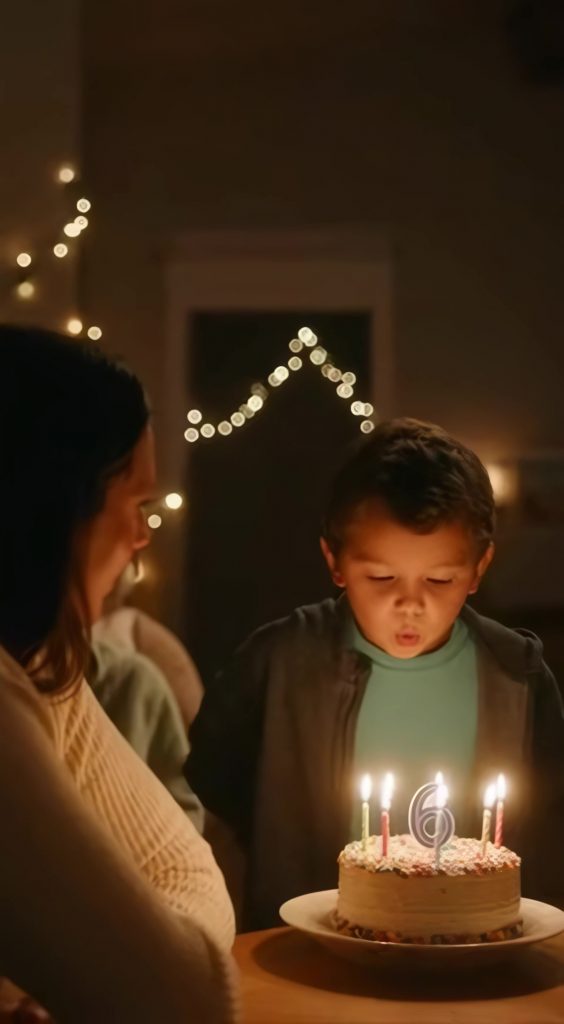
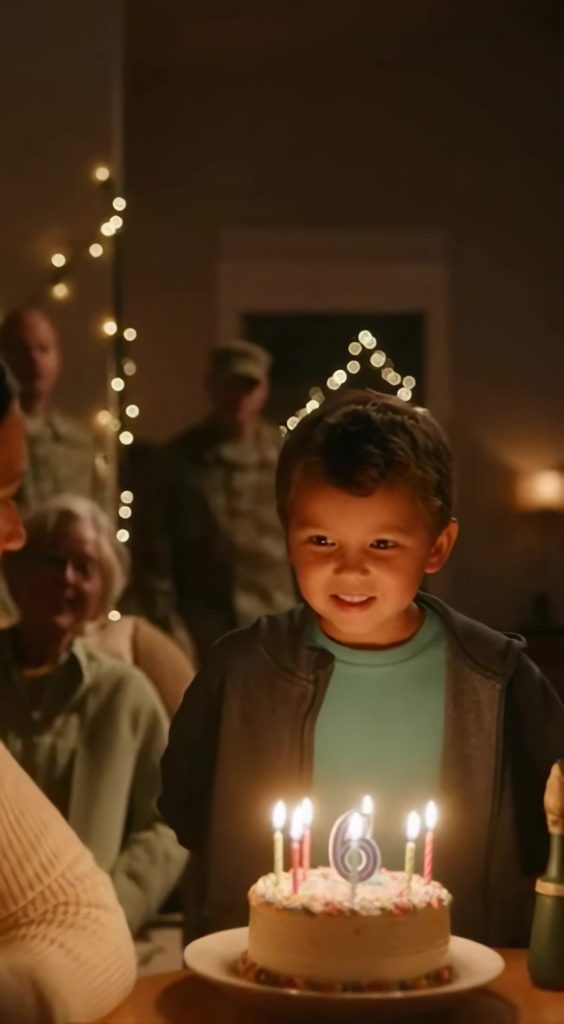
In this touching scene, a young boy stands in front of a small birthday cake glowing with candles. Family members are gathered nearby, watching him with warm smiles. The room feels intimate and familiar, filled with soft lights and the kind of quiet excitement that often surrounds a child’s birthday.
For a moment, it is simply a celebration.
The boy looks down at the cake, surrounded by the people who came to share the evening with him.
Then something unexpected happens.
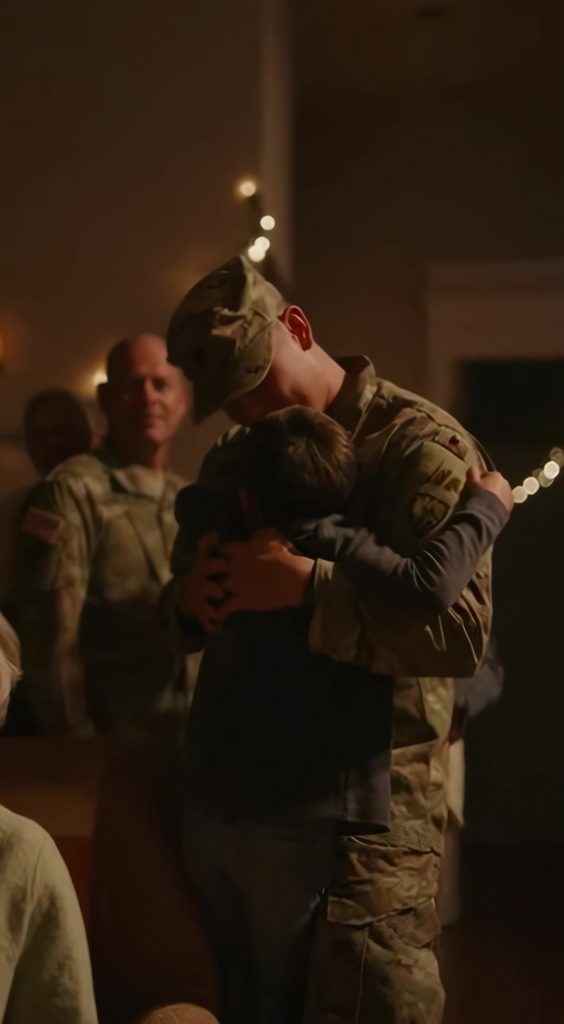
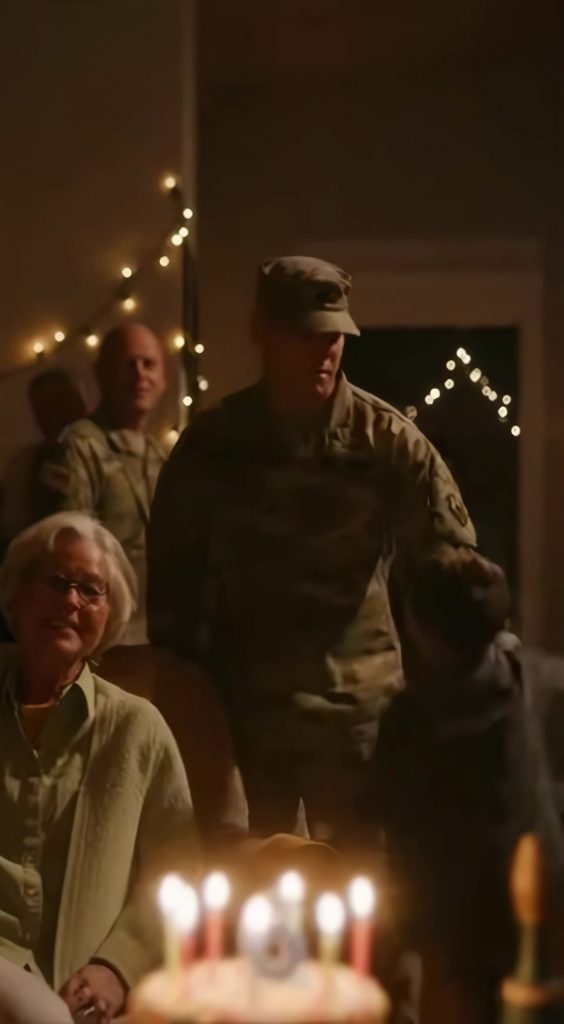
A man in uniform appears behind him.
At first, the boy seems focused on the birthday in front of him. He does not immediately realize that someone important has entered the room.
Then he turns.
Recognition comes quickly.
The birthday cake is forgotten.
The candles are forgotten.
The boy leaves the table and rushes toward the man, wrapping his arms around him in a tight embrace.
In that instant, the celebration becomes about far more than another year older.
It becomes a homecoming.
For many American families, birthdays have always carried a special kind of nostalgia.
Older generations may remember homemade cakes cooling on kitchen counters, paper streamers taped to the walls, and relatives crowded into living rooms with folding chairs pulled in from other rooms.
There were no elaborate decorations ordered online.
No smartphones recording every second.
Sometimes there was one camera with a roll of film, and everyone hoped at least one photograph would turn out clearly.
But what people remember most is rarely the decoration.
They remember who was there.
They remember who stood behind the cake.
They remember whose voice joined in when everyone began singing.
And when someone important was missing, that absence could be felt even in the happiest room.
Years ago, families separated by distance relied on letters, occasional phone calls, and photographs to stay connected. A birthday card arriving in the mail might be saved for years. A handwritten message could be read again long after the candles had been blown out.
Children often experienced that waiting in a simple, honest way.
They did not need to understand every reason someone was away.
They only knew that someone they loved was not there.
That is what makes the moment in this video so powerful.
The boy does not stop to explain what he feels.
He does not need to.
He runs.
He reaches.
He holds on.
For older viewers, that reaction may awaken memories of their own family reunions.
Perhaps someone arrived unexpectedly at Christmas.
Maybe a parent walked through the door just before dinner.
Or a relative returned in time for a birthday that everyone feared they might miss.
Those moments often become part of family history.
Years later, the details begin to blur.
The color of the cake may be forgotten.
The number of candles may become uncertain.
People may disagree about exactly who was sitting where.
But no one forgets the feeling.
The surprise.
The relief.
The embrace.
The realization that someone who had been absent was suddenly close enough to hold again.
One day, the boy in this scene may look back on this birthday and remember very little about the gifts he received.
He may not remember what flavor the cake was.
He may not remember the decorations.
But he may remember turning around.
He may remember seeing that familiar face.
And he may remember running into an embrace that mattered more than anything waiting on the table.
Because sometimes the best birthday gift is not wrapped.
Sometimes it simply walks through the door.